


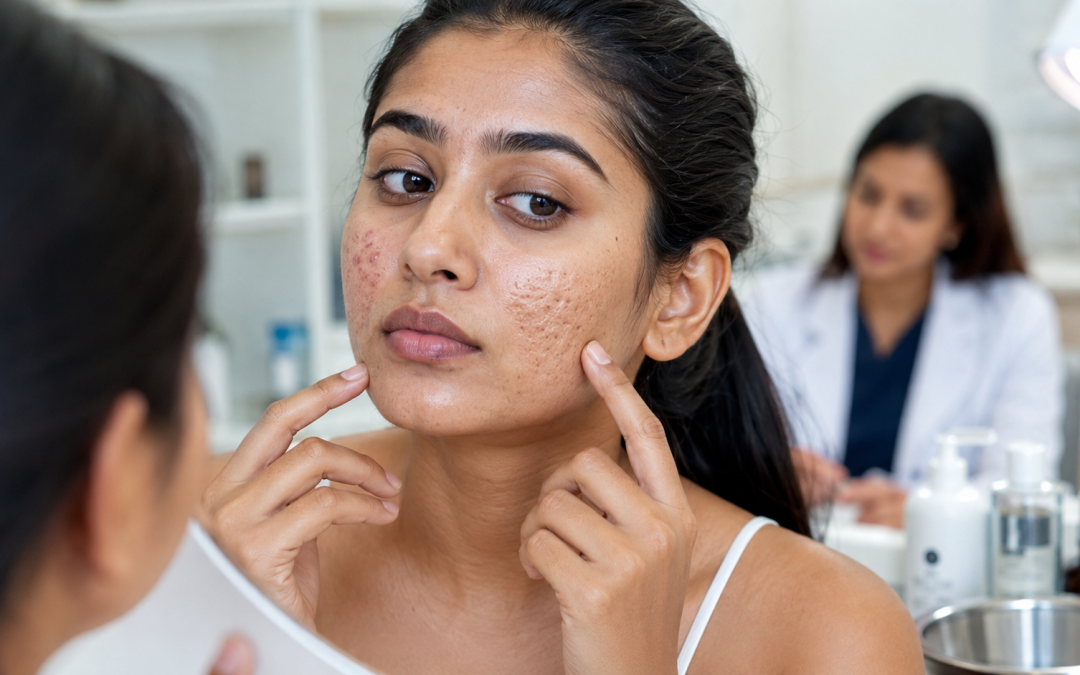
Acne may disappear, but the marks it leaves behind often become the next concern. Many people use the terms acne marks and acne scars interchangeably, but they are not the same. Understanding the difference is important because each requires a different approach to treatment.
While acne marks usually fade over time with the right skincare, acne scars involve changes in the skin’s texture and often need professional dermatological treatments for noticeable improvement.
If you’ve ever wondered why some blemishes disappear while others leave permanent indentations or raised areas, this guide will help you understand the difference and choose the most appropriate treatment.
What Are Acne Marks?
Acne marks are temporary areas of discoloration that remain after an acne breakout has healed. They occur because the skin produces excess pigment or experiences temporary redness during the healing process. Unlike scars, acne marks do not permanently change the texture of the skin.
Types of Acne Marks
Post-Inflammatory Hyperpigmentation (PIH)
These appear as:
- Brown spots
- Dark patches
- Greyish pigmentation
They are more common in medium to darker skin tones and usually fade gradually over several weeks or months.
Post-Inflammatory Erythema (PIE)
These appear as:
- Pink spots
- Red marks
- Purple discoloration
They are more common in lighter skin tones and occur due to damaged tiny blood vessels beneath the skin.
What Are Acne Scars?
Acne scars develop when severe inflammation damages the deeper layers of the skin during the healing process.
Instead of simply leaving pigmentation behind, the skin’s collagen structure changes, resulting in permanent texture changes.
Acne scars usually do not disappear on their own and often require professional treatment.
Types of Acne Scars
Ice Pick Scars
These are narrow, deep scars that extend into the skin and resemble tiny puncture marks.
Boxcar Scars
Boxcar scars are wider with clearly defined edges and create shallow depressions on the skin.
Rolling Scars
Rolling scars create uneven, wave-like depressions that make the skin appear bumpy.
Hypertrophic Scars
Instead of forming depressions, hypertrophic scars appear as raised, thickened areas caused by excess collagen production.
Acne Marks vs Acne Scars: What’s the Difference?
| Acne Marks | Acne Scars |
| Flat discoloration | Change in skin texture |
| Brown, red, or pink spots | Depressed or raised areas |
| Usually fade with time | Often permanent without treatment |
| Located on the skin surface | Extend into deeper skin layers |
| Respond well to skincare | Usually require dermatological procedures |
A simple way to identify the difference is by touching your skin.
- If the area feels smooth but looks darker or red, it is likely an acne mark.
- If you can feel indentations or raised areas, it is likely an acne scar.
What Causes Acne Scars?
Several factors increase the risk of developing acne scars.
These include:
- Severe inflammatory acne
- Delaying acne treatment
- Picking or squeezing pimples
- Deep cystic acne
- Genetics
- Repeated breakouts in the same area
The earlier acne is treated, the lower the risk of permanent scarring.
Can Acne Marks Turn Into Acne Scars?
No.
Acne marks themselves do not become scars. However, severe untreated acne that damages deeper skin layers may leave scars while also causing temporary pigmentation.
This is why early acne management is so important.
Best Treatments for Acne Marks
Because acne marks are related to pigmentation rather than texture, treatment focuses on encouraging skin renewal and reducing excess pigment.
A dermatologist may recommend:
Topical Medications
Ingredients such as:
- Niacinamide
- Azelaic Acid
- Vitamin C
- Retinoids (when appropriate)
can gradually improve skin tone.
Chemical Peels
Professional chemical peels help exfoliate damaged skin and encourage fresh skin cell turnover, improving post-acne pigmentation.
Sunscreen
Daily sunscreen is essential because UV exposure can make acne marks darker and delay fading.
Best Treatments for Acne Scars
Since acne scars involve structural damage, creams alone usually cannot remove them.
Depending on the type and severity of scars, a dermatologist may recommend:
Microneedling
Microneedling stimulates collagen production, helping improve shallow acne scars and overall skin texture.
Laser Treatments
Fractional laser treatments encourage collagen remodeling and improve the appearance of many types of acne scars.
Subcision
This procedure releases fibrous bands beneath rolling scars, allowing the skin surface to become smoother.
Chemical Reconstruction Procedures
Certain deep scars may benefit from specialised procedures performed under dermatologist supervision.
Combination Treatments
Many patients achieve the best results through a personalised treatment plan that combines different procedures over multiple sessions.
How Long Does Treatment Take?
Treatment duration depends on:
- Type of acne marks or scars
- Severity
- Skin type
- Individual healing response
Pigmentation may improve within a few months with consistent care, while acne scar treatments usually require multiple sessions spaced several weeks apart. Improvement is gradual because collagen rebuilding takes time.
Can Acne Scars Be Completely Removed?
While many treatments can significantly improve the appearance of acne scars, complete removal is not always possible.
The goal is to:
- Smooth skin texture
- Reduce scar depth
- Improve overall skin appearance
- Boost confidence
Modern dermatology offers highly effective options that can produce noticeable improvements when performed by qualified professionals.
How to Prevent Acne Marks and Scars
Preventing acne is always easier than treating its after-effects.
Here are some dermatologist-recommended tips:
- Avoid picking or squeezing pimples.
- Begin acne treatment early.
- Follow a skincare routine suitable for your skin type.
- Wear sunscreen every day.
- Avoid harsh scrubs that irritate active acne.
- Stay consistent with prescribed treatments.
- Consult a dermatologist if acne becomes painful, cystic, or persistent.
When Should You See a Dermatologist?
Professional evaluation is recommended if:
- Your acne continues despite using over-the-counter products.
- You notice deep or painful cystic acne.
- Acne marks are taking several months to improve.
- You have visible depressions or raised scars.
- Breakouts are affecting your confidence or daily life.
Early treatment can help reduce the risk of permanent scarring and improve long-term skin health.
Although acne marks and acne scars may look similar at first glance, they are very different conditions that require different treatment approaches.
Acne marks are temporary discolorations that often improve with time and appropriate skincare. Acne scars, on the other hand, involve permanent structural changes to the skin and usually require professional dermatological procedures for significant improvement.
The key to healthy, clear skin is early intervention. Treating acne promptly, protecting your skin from the sun, and seeking expert guidance when needed can help minimise long-term damage and restore smoother, more even-looking skin.
If you’re unsure whether you’re dealing with acne marks or acne scars, consulting a qualified dermatologist can help you receive the right diagnosis and a personalised treatment plan based on your skin type and concerns.
Frequently Asked Questions (FAQs)
1. Are acne marks and acne scars the same?
No. Acne marks are temporary discoloration left after acne heals, while acne scars are permanent changes in the skin’s texture caused by damage to deeper layers.
2. Do acne marks disappear naturally?
Yes. Most acne marks gradually fade over time, especially with proper skincare, sun protection, and dermatologist-recommended treatments.
3. Can creams remove acne scars?
Topical creams may improve skin texture slightly, but established acne scars usually require professional treatments such as microneedling, laser therapy, or other dermatological procedures.
4. Why should I avoid picking pimples?
Picking pimples increases inflammation and damages deeper skin layers, making acne scars and pigmentation more likely.
5. Which treatment is best for acne scars?
The ideal treatment depends on the type and severity of the scars. A dermatologist may recommend microneedling, laser resurfacing, subcision, chemical peels, or a combination of treatments.
6. How can I prevent acne marks and scars?
Treat acne early, avoid touching or squeezing pimples, wear sunscreen daily, follow a suitable skincare routine, and seek professional advice if acne is persistent or severe.