



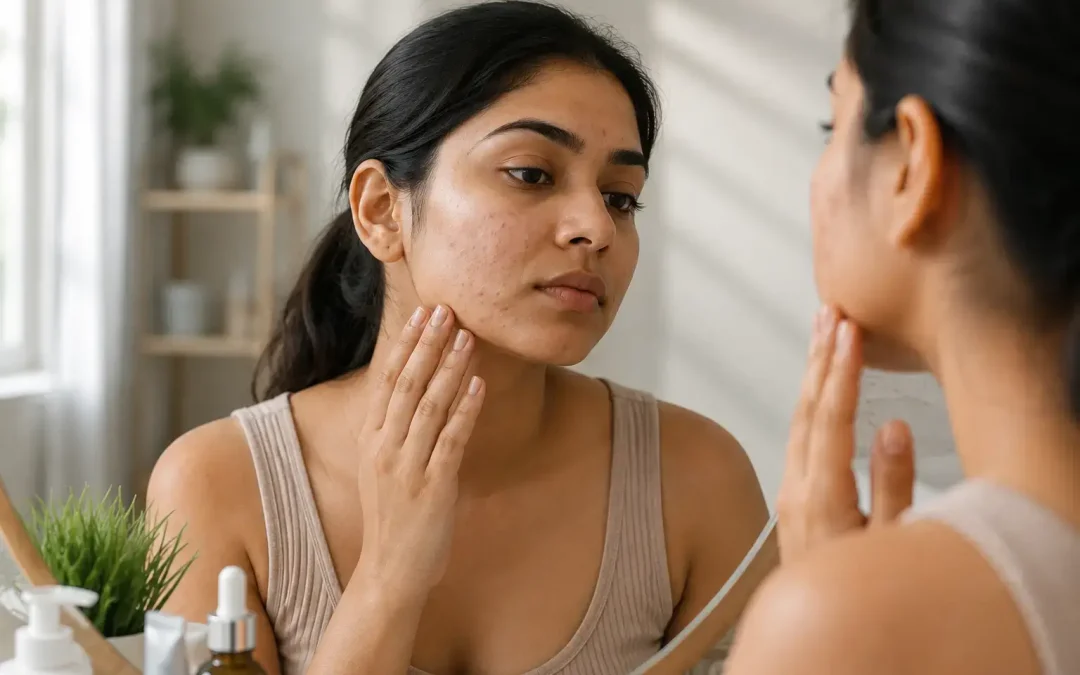
Acne can affect the skin long after a breakout disappears. For some people, the main concern is repeated active acne. Others may be left with dark marks, uneven texture, or deeper scars. These concerns are often grouped together, but they need to be treated differently. That distinction becomes especially important when someone is exploring acne scar removal treatment, because the first step is determining whether the visible marks are actually scars.
Active Acne Comes First
If new pimples are still appearing regularly, controlling the acne is usually an important priority. Acne can occur because of factors such as excess oil production, blocked pores, inflammation, hormonal influences, and individual skin characteristics. A dermatologist may recommend topical treatment, oral medicines, skincare modifications, or procedures depending on the severity. For people seeking the best acne treatments, the goal should not simply be drying out every pimple. Long-term acne management also aims to reduce inflammation and minimise the possibility of new scars developing.
Acne Marks Are Different From Scars
Flat reddish or brown marks left after acne may look like scars, but they are often pigmentation. These marks can improve gradually and may respond to treatments targeting pigmentation. True acne scars involve structural changes in the skin.
They may appear as:
- Small deep pits
- Wider depressed scars
- Rolling unevenness
- Raised scars
- Mixed textural changes
Knowing which type is present helps determine the right treatment.
Why One Procedure Does Not Work for Every Scar
Someone searching for the best acne scar treatment may expect to find one procedure that works for every type of scar. In reality, different scars respond differently. A shallow scar may require a different approach from a deep ice-pick scar. Some patients may also have pigmentation and enlarged pores alongside structural scarring. For this reason, dermatologists sometimes use a combination of procedures rather than depending on a single treatment.
Can Lasers Help Acne Scars?
Laser treatments may be used for selected acne scars, pigmentation, and textural irregularities. When choosing a laser treatment clinic, the technology itself is only one part of the treatment. Skin type, scar depth, previous pigmentation, and the intensity of the procedure all need to be considered. Laser treatments should therefore be customised rather than performed using the same settings for everyone.
Where Does PRP Fit In?
PRP treatment may sometimes be used alongside procedures that encourage collagen remodelling. PRP involves processing a small amount of the patient’s own blood to obtain platelet-rich plasma, which is then used during treatment. It may be recommended as part of a broader acne-scar strategy in selected patients rather than as a stand-alone solution for every scar.
Patience Is Important
Acne-scar treatments often work by encouraging changes within the skin over time. Improvement may therefore develop gradually rather than immediately after a session. The final outcome depends on factors such as scar type, skin characteristics, treatment selected, and individual healing response.
Frequently Asked Questions
- Can acne scars disappear completely?
Many scars can become considerably less noticeable, but completely removing every scar may not always be realistic. - Should active acne be treated before scars?
Usually, yes. Controlling new breakouts can help prevent additional scars while older ones are being treated. - Are dark acne marks permanent scars?
Not necessarily. Flat brown or red marks are often pigmentation rather than structural scars. - Is laser treatment suitable for every acne scar?
No. The treatment depends on the scar pattern, skin type, and depth of the scars. - Why are multiple treatments sometimes recommended?
A person may have different scar types along with pigmentation or enlarged pores, so combining treatments can address several concerns more effectively.