



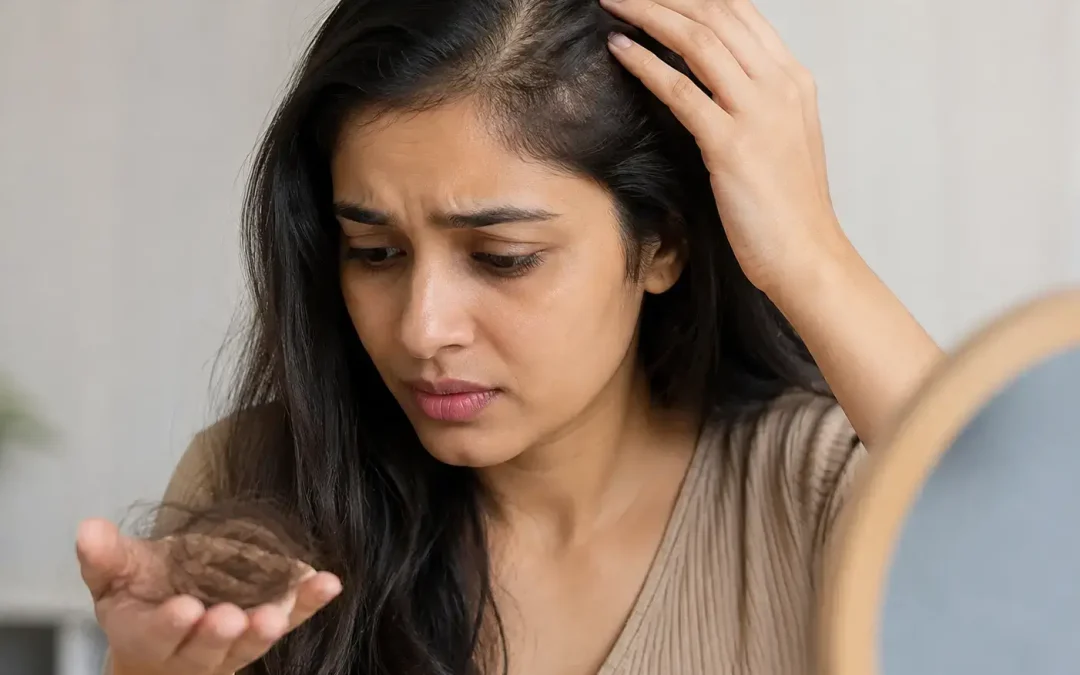
Finding extra hair on your pillow, in the shower, or on your hairbrush can be worrying. But hair fall does not always mean permanent hair loss. Hair can shed for many different reasons, and identifying the cause is often more useful than immediately starting serums or procedures. A consultation with a trichologist can help determine whether the hair fall is temporary, hereditary, related to the scalp, or connected with another underlying factor.
Why Does Hair Fall Increase?
Hair naturally goes through cycles of growth and shedding. However, excessive or persistent shedding may occur due to:
- Stress
- Illness or fever
- Nutritional deficiencies
- Hormonal changes
- Genetics
- Scalp disorders
- Certain medications
- Changes in hair-care habits
The same symptom can therefore have several possible causes.
When Should Hair Fall Be Checked?
Occasional shedding does not always need treatment, but certain changes deserve attention.
Consider seeking professional evaluation when you notice:
- Progressive thinning
- Widening hair partition
- Receding hairline
- Visible scalp
- Bald patches
- Sudden heavy shedding
- Persistent scalp itching
- Significant changes in hair density
People looking for the best hair loss treatment should ideally begin with diagnosis rather than selecting a treatment purely because it is popular online.
How Is Hair Loss Treated?
The treatment depends on the cause. Some people may need medical treatment, while others may benefit from correcting nutritional deficiencies, treating scalp problems, or changing certain hair-care practices. In selected types of hair thinning, procedures may also be considered.
Understanding PRP for Hair
PRP treatment is commonly discussed for certain types of hair thinning. PRP stands for platelet-rich plasma. A small quantity of the patient’s blood is processed to obtain a platelet-rich component, which is then used in the scalp treatment area. It may be incorporated into a broader hair-loss management plan when appropriate. However, PRP is not a guaranteed solution for every form of hair loss.
Why Do PRP Results Differ?
Treatment response can depend on:
- Cause of hair loss
- Duration of thinning
- Condition of existing follicles
- Age
- Stage of hair loss
- Overall health
- Consistency with treatment
This is why the experience of another patient cannot automatically predict your own results.
Choosing a Hair Clinic
When searching for the best hair clinic or a reliable hair treatment clinic, pay attention to how the consultation is conducted. A thorough consultation should involve understanding the history of the hair loss and examining both the scalp and the pattern of thinning. The treatment plan should then be based on what is actually causing the problem.
Scalp Health Shouldn’t Be Ignored
Problems such as persistent dandruff, inflammation, itching, and scaling may also affect hair and scalp health. Repeatedly changing shampoos without understanding the condition may provide temporary relief without addressing the underlying problem.
Frequently Asked Questions
- Is all hair fall permanent?
No. Some types of hair shedding are temporary and may improve once the underlying trigger is corrected. - Is PRP suitable for everyone with hair loss?
No. Whether PRP is appropriate depends on the type and stage of hair loss. - How quickly can hair-loss treatment show results?
Hair grows slowly, so meaningful changes generally take time. The timeline differs depending on the condition and treatment. - Can stress cause hair fall?
Yes, significant physical or emotional stress can contribute to increased shedding in some people. - When should I see a specialist?
Persistent shedding, progressive thinning, bald patches or changes in scalp health are good reasons to seek an evaluation.